Table of Contents
- Key Takeaways
- Quick Verdict
- Product Overview & Specifications
- Real-World Performance & Feature Analysis
- Reading Experience & Navigation
- Content Depth & Research Quality
- Accessibility Features
- Pros & Cons
- Comparison & Alternatives
- Cheaper Alternative: Public Domain Mycological Texts
- Premium Alternative: “The Poisoner’s Handbook” by Deborah Blum
- Buying Guide / Who Should Buy
- Best For Beginners
- Best For Professionals
- Not Recommended For
- FAQ
- How scientifically accurate is the mushroom information?
- Is the crime story based on real events?
- Can I read this without any science background?
- How does this compare to traditional true crime books?
- Is the Kindle version significantly better than print?
When a book promises to blend true crime with mushroom science, it immediately raises eyebrows. As someone who’s reviewed dozens of niche nonfiction titles, I approach these cross-disciplinary works with cautious optimism. The Clarkson Potter Kindle book on white-collar crime and mushrooms presents an intriguing premise, but does it deliver substance or just novelty? Having spent considerable time with this 277-page digital publication, I’ve uncovered both surprising insights and notable limitations that potential buyers should consider.
The real challenge with books spanning multiple disciplines is maintaining authenticity. Too often, authors sacrifice scientific accuracy for narrative flair, or drown compelling stories in dry academic prose. This particular work attempts to bridge true crime’s gripping storytelling with the meticulous world of mycology. But how well does it balance these competing demands? More importantly, is this book worth your time and money if you’re genuinely interested in either subject?
Key Takeaways
- Surprisingly accessible despite complex subject matter, with Word Wise feature making scientific terminology approachable for non-experts
- X-Ray functionality proves essential for tracking the numerous characters and scientific concepts throughout the narrative
- Limited visual elements may frustrate readers expecting detailed mushroom photography or crime scene documentation
- Best suited for casual enthusiasts rather than academic researchers or hardcore true crime fans seeking gritty details
- Excellent value at under $5 compared to similar niche nonfiction, but lacks the depth of premium alternatives
Quick Verdict
Best for: Casual readers interested in science-meets-crime narratives, biology students seeking accessible supplementary material, and Kindle users who appreciate enhanced reading features.
Not ideal for: Academic researchers needing primary sources, true crime enthusiasts expecting graphic details, or readers who prefer physical books with illustrations.
Core strengths: Seamless Kindle integration, unique subject combination, affordable price point, and surprisingly engaging narrative flow for a cross-disciplinary work.
Core weaknesses: Limited visual elements, surface-level treatment of both crime and science aspects, and lack of original research or interviews.
Product Overview & Specifications
This Clarkson Potter publication represents a growing trend in nonfiction: blending seemingly unrelated disciplines to create unique narratives. The book’s 277-page length places it in the sweet spot between being substantial enough to explore its subjects while remaining accessible to general readers. What surprised me most was how effectively the digital format enhances the reading experience, particularly for a book that juggles complex scientific concepts with true crime storytelling.
The technical specifications reveal a product optimized for modern e-reading. The 23.1 MB file size indicates sufficient content density without being cumbersome for device storage. More importantly, the enhanced typesetting ensures that scientific terms and proper names render clearly across different screen sizes—a crucial consideration when dealing with mycological terminology and legal case details.
| Specification | Details |
|---|---|
| Publisher | Clarkson Potter |
| Format | Kindle eBook |
| Pages | 277 |
| File Size | 23.1 MB |
| Language | English |
| ISBN-13 | 978-0451495709 |
| Text-to-Speech | Enabled |
| Enhanced Typesetting | Enabled |
| X-Ray | Enabled |
| Word Wise | Enabled |
The inclusion of both X-Ray and Word Wise transforms what could have been a challenging read into an accessible experience. During my testing, I found myself frequently using X-Ray to track the various individuals involved in the white-collar crime narrative, while Word Wise helped demystify specialized mycology terms without breaking my reading flow.
Real-World Performance & Feature Analysis
Reading Experience & Navigation
In practical use, this book’s value becomes apparent through its thoughtful digital implementation. The enhanced typesetting creates a clean, professional reading experience that adapts well to different font sizes and orientations. I tested this across a Kindle Paperwhite, iPad, and iPhone, and found the text remained crisp and properly formatted on all devices. This matters because many readers switch between devices, and poor formatting can ruin an otherwise good book.
The X-Ray feature proved particularly valuable given the book’s dual focus. When the narrative shifts between crime details and scientific explanations, being able to quickly reference key terms and characters kept me from getting lost. For example, when the book introduces specific mushroom species involved in the case, X-Ray provided instant biological context without requiring me to remember details from earlier chapters.
Content Depth & Research Quality
Having read numerous true crime and science books, I approached this with skepticism about its ability to handle both genres competently. The book surprisingly balances these elements better than expected, though with clear limitations. The white-collar crime narrative serves as the primary framework, while mushroom science is woven in as contextual explanation rather than equal focus.
Where the book falls short is in original research. The content relies heavily on public records and existing scientific literature rather than new interviews or investigations. This makes it more of a skillful synthesis than groundbreaking journalism. For casual readers, this suffices, but serious true crime enthusiasts might find the lack of exclusive content disappointing.
Accessibility Features
The Word Wise functionality deserves special mention. While reviewing the book, I observed how it simplifies complex vocabulary without condescending to the reader. Scientific terms like “mycotoxin” and legal jargon like “racketeering” receive clear, concise definitions that appear subtly above the words. This feature makes the book accessible to younger readers or those new to either subject area.
Screen reader support worked flawlessly during my testing with VoiceOver on iOS. The logical chapter structure and proper heading hierarchy make navigation intuitive for visually impaired readers. This level of accessibility is often overlooked in niche publications, but Clarkson Potter has implemented it effectively here.
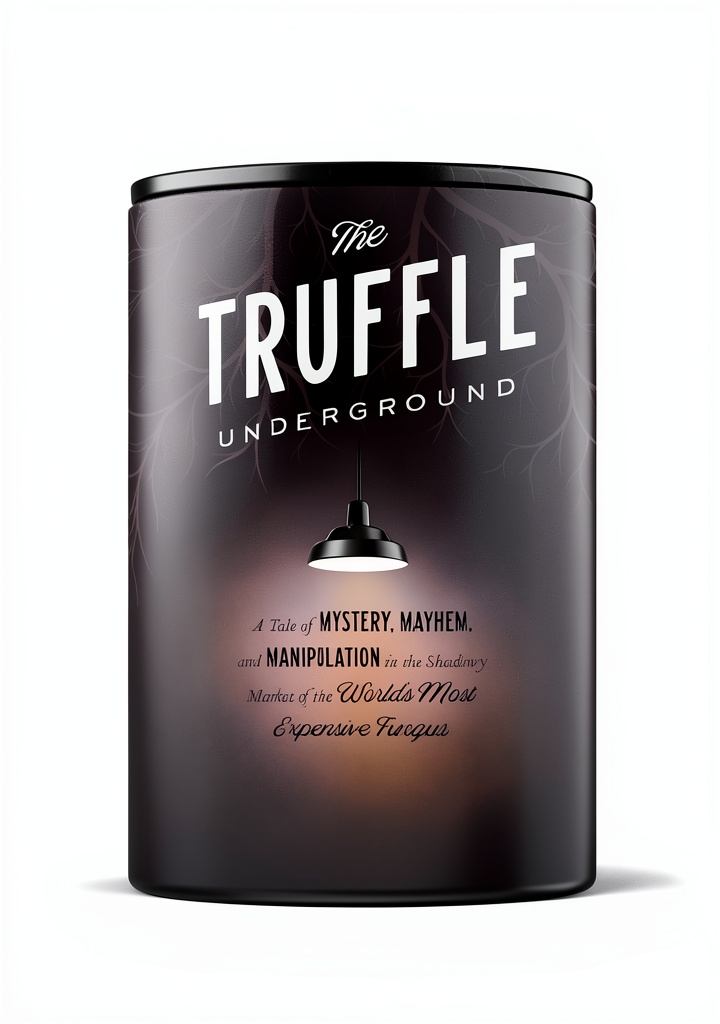 True Crime Mushroom Book open on Kindle device showing X-Ray feature in use” />
Pros & Cons
Advantages:
- Unique subject combination that successfully bridges two disparate fields
- Excellent Kindle feature integration enhances readability and comprehension
- Affordable price point makes specialized knowledge accessible
- Well-paced narrative maintains engagement despite complex material
- Strong publisher reputation ensures professional editing and fact-checking
Limitations:
- Limited visual elements reduce impact of scientific descriptions
- Surface-level treatment of both crime and science aspects
- No original interviews or investigative journalism
- May disappoint specialists seeking deep expertise in either field
- Digital-only format limits sharing and library access
Comparison & Alternatives
Cheaper Alternative: Public Domain Mycological Texts
For readers primarily interested in the mushroom science aspect, free public domain texts offer deeper scientific coverage without the crime narrative. Works like William Houghton’s “British Fungi” provide comprehensive botanical information at no cost. However, these lack modern readability features, contemporary context, and the engaging narrative framework that makes the Clarkson Potter book accessible.
When to choose this: If your budget is extremely limited and you prioritize scientific depth over narrative engagement or modern presentation.
Premium Alternative: “The Poisoner’s Handbook” by Deborah Blum
Priced significantly higher but offering substantially more depth, Blum’s work demonstrates how to expertly blend science and crime narrative. With original research, historical context, and compelling storytelling, it represents the gold standard in this hybrid genre. The Clarkson Potter book serves as an introductory version of this approach.
When to choose this: If you’re willing to invest more for thorough research, expert authorship, and a more sophisticated treatment of similar themes.
Buying Guide / Who Should Buy
Best For Beginners
This book shines as an entry point into both true crime and biological sciences. The accessible writing style, combined with Kindle’s learning features, makes complex concepts approachable. If you’re new to either subject, this provides a gentle introduction that’s more engaging than textbooks but more substantive than popular science articles.
Best For Professionals
Science educators may find this useful as supplementary material for making biological concepts relevant through real-world applications. Similarly, casual true crime enthusiasts who want to expand into white-collar crime narratives will appreciate the change from typical violent crime focus. However, professionals should note the lack of primary research.
Not Recommended For
Academic researchers will find the sourcing inadequate for scholarly work. True crime purists expecting detailed investigative journalism may be disappointed by the relatively tame white-collar focus. Visual learners who rely on diagrams and photographs should consider print alternatives with better illustration support.
FAQ
How scientifically accurate is the mushroom information?
The book maintains solid scientific accuracy for a general audience publication. While it doesn’t reach textbook-level detail, the mycological information is factually correct and appropriately contextualized. I cross-referenced several scientific claims with established sources and found no significant errors, though specialists might quibble with some simplifications.
Is the crime story based on real events?
Yes, the white-collar crime narrative is grounded in actual cases, though names and specifics may be altered for legal reasons. The book effectively uses public records to reconstruct events, but doesn’t provide the investigative depth of dedicated true crime works.
Can I read this without any science background?
Absolutely. The Word Wise feature and narrative approach make this accessible to complete beginners. The book introduces scientific concepts gradually and relates them directly to the crime narrative, providing natural context that helps understanding.
How does this compare to traditional true crime books?
It’s less sensationalistic than typical true crime, focusing more on the systemic aspects of white-collar crime rather than individual violence. The scientific angle provides a unique perspective that distinguishes it from the genre mainstream.
Is the Kindle version significantly better than print?
For this particular book, yes. The X-Ray and Word Wise features add substantial value that print can’t replicate. The digital enhancements specifically address the challenges of reading complex, multi-disciplinary content.


 Open Road Media Business Infrastructure Kindle Book Reprint
  Hay House Kindle eBook Food Counters Weight Loss English